Women, Folklore and Sauna
There is a moment that often arrives unbidden in the sauna. It might be during the third round, once the body has softened, when conversation has quietened and the visceral stimulation of bathing is gently working within. Something shifts. Defences drop. Consciousness widens. We become aware of how good it feels to sit together, relaxed, open, human. And then the thought arises: we’ve always done this.
Old stories and folklore frequently locate people bathing together and offer an understanding of this ‘collective remembering’. And folklore is not simply stories from the past, or entertainment for children. It is a body of living, expressive culture: knowledge, practices and narratives shared orally from person to person, shaped over generations. Folklore reflects and instructs culture, offering models for how to live, how to sustain good relationships, and how to move through change.
Across cultures, women’s folklore in particular is tied to sauna and heat-bathing traditions. In Finnish and Baltic traditions, the sauna has long been a place for birth, healing and death. Stories from the Finnish epic tome, the Kalevala, place women at the heart of sauna practice, as keepers of herbal knowledge, ritual and embodied wisdom. Similar female roles appear across other indigenous heat-bathing cultures.
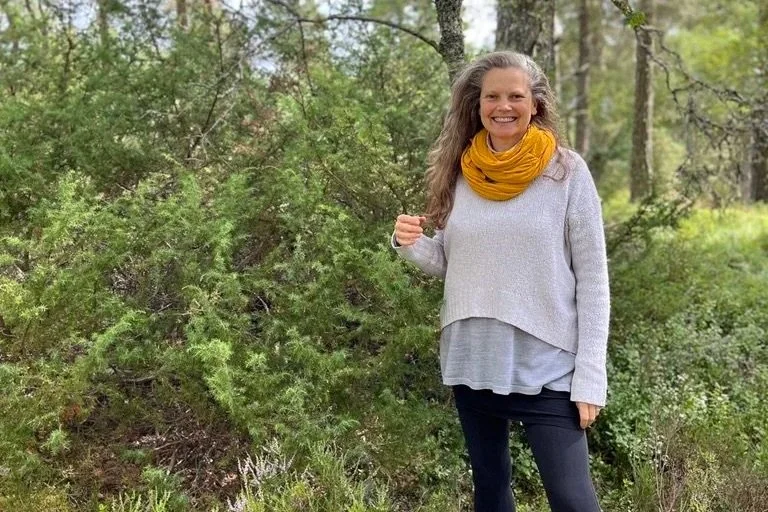
Image: Foraging for juniper in Scotland, to tell 'The Juniper Tree' at Soul Water Sauna community night.
They are often in liminal spaces; at springs, rivers, lakes, cloud realms and shorelines. Think of Selkie Maidens from the Orkney Islands, shedding their skins to bathe together, or cloud women like Nephele and her sisters, or Greek goddess Artemis and her nymphs at the water’s edge. One much loved Lithuanian wonder tale, ‘Spruce: Queen of Snakes’ begins with human sisters bathing. Across the British Isles, women have carried songs, seasonal rituals, family stories and local myths, passing them on when the time is right. Stories are cultural nutrients, nourishing connection to body, land and community.
Stories work brilliantly in the sauna - that hot and cold, clothed and unclothed, familiar and magical place of transition. They belong in such spaces, and when recounted carefully, they can open conversations that can otherwise be difficult. They are not moral lectures, but imaginative frameworks that allow us to explore complex questions. Many stories unfold when a woman is watched, separated or disrupted, revealing concerns around consent, boundaries, wildness and respect. They provide metaphors for how to negotiate intimacy, how to honour autonomy, how to live well with our own untamed nature and with others; how to outwit a predator, how to accept the way of things. Bathers love to hear about herb and plant transformations and our relationship with the natural world; I have created at least 60 different storytelling sauna rituals where I tell of knuckers (Sussex water dragons), pharisees (fairies) and witch hares (old ladies who turn themselves into hares when no one is looking). People love Greek Myths - Demeter, Artemis, Medea, Dionysus - and fairy tales; Sleeping Beauties work really well. I’ve told about six variants.
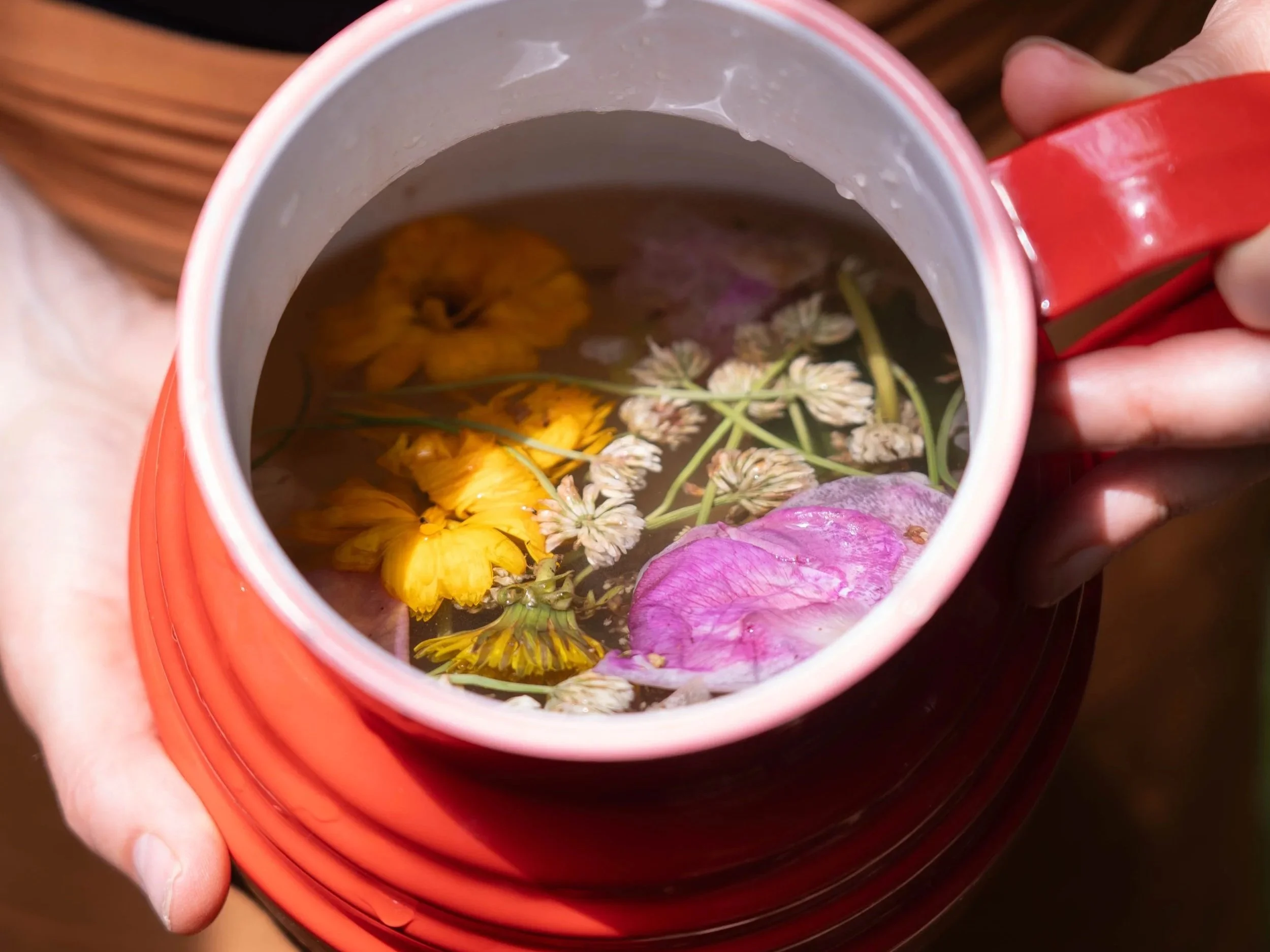
Image: Flower and herb shoulder rinse at Wild Spa Wowo, Sussex
Stories were traditionally shared around hearths, fires and bathing spaces. Passed on orally from teller to listener; shaped, polished and buffed over time, having passed through countless human imaginations. When we listen, we are not passive recipients; we are participating in a shared act of creative imagination.
For those involved in British sauna culture, this matters. Our bathing scene is still in its infancy and we must remember, sauna is not only a wellness practice; it is a social and cultural one. Connecting it with our local folklore can enrich sauna practice without appropriating anything. It can also create bridges between sauna practitioners and storytellers.
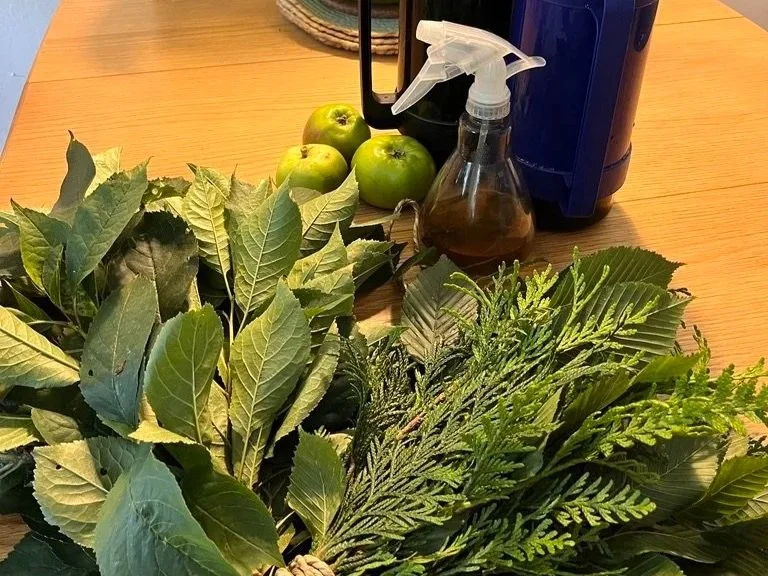
Image: Making cherry, hazel and redwood cedar whisks for telling selkie stories at Sea Biscuit Sauna, Aberdeen and Elie Seaside Sauna, Scotland.
There is a rich network of traditional storytellers across the UK who are supported by organisations such as the Society for Storytelling, who promote oral tradition as an inclusive, communal art form. These practitioners carry rooted, place-based stories that can deepen our relationship to where we bathe and to one another. I encourage anyone to reach out to their local storytelling club, through sfs.org.uk
When the thought “we’ve always done this” arises in the sauna - as it often does - storytellers recognize it and agree. People have always gathered to bathe, tell stories, mark change, and sit together. Remembering this does not take us backwards. It roots us, so we can move forward with integrity, imagination and care.