The UK joins the Herbal Cup: A new chapter for competitive sauna rituals.
At the end of November, the British Sauna Society travelled abroad to spectate at the Herbal Cup in Prague, Czech Republic. This competition has been running for 10 years and is dedicated to the art, skill and cultural heritage of herbal sauna rituals. We went to experience the event first‑hand, observe how the competition is conducted, and understand what would be required to host a UK edition next autumn. BSS Directors Deborah Carr and Gabrielle Reason were also there to formally enter the UK into the Herbal Cup for 2026, with Deborah signing the contract to make it official.
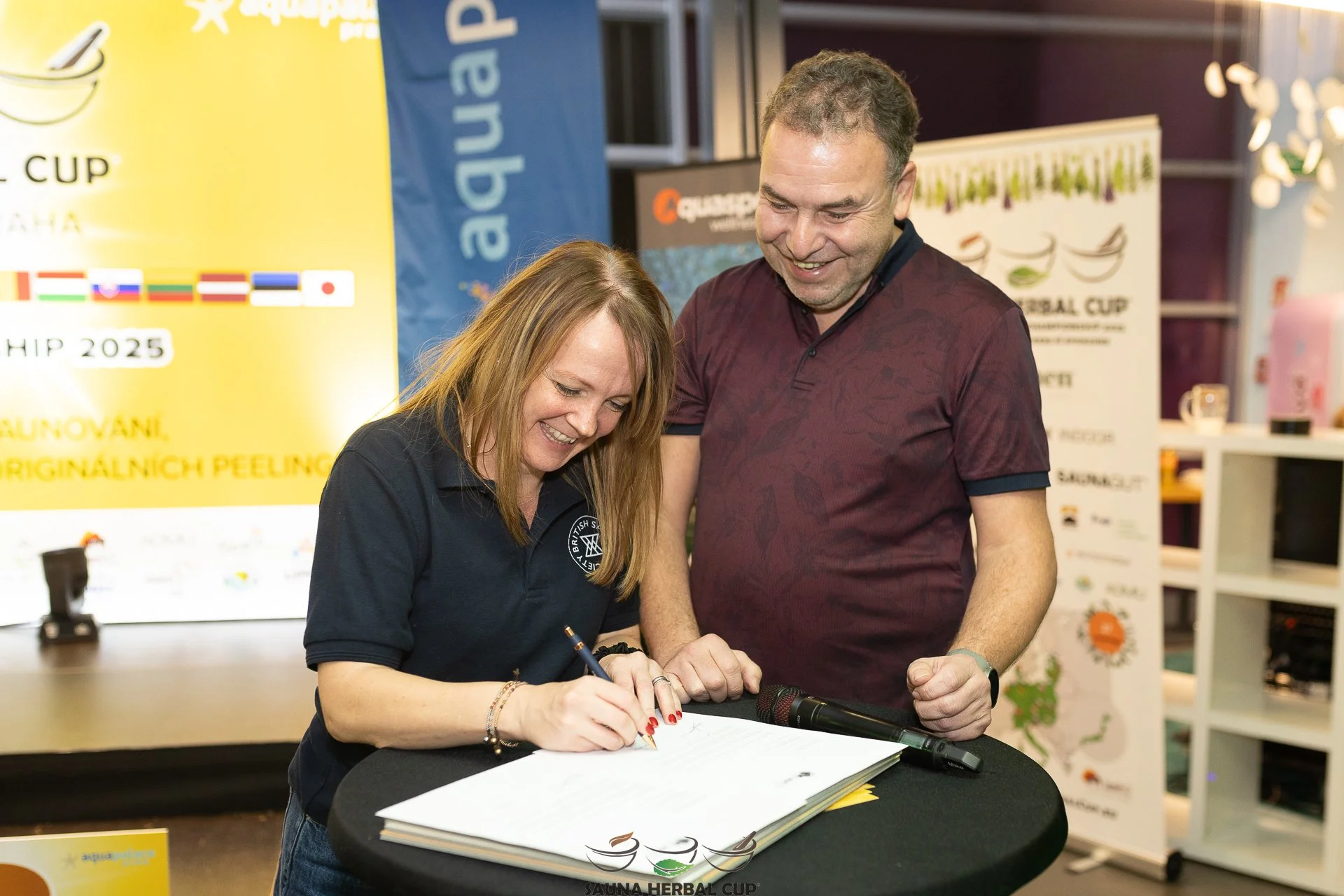
Deborah Carr and Pavel Hofrichter sign the contract to accept the UK into the Herbal Cup next year. Image credit: Sauna Herbal Cup
What is the Herbal Cup?
Now in its tenth year, the Herbal Cup is the brainchild of founders Pavel Hofrichter and Radka Hortová, who have spent a decade shaping a competition that celebrates and showcases nature and plants in thermal rituals. Seventeen countries now take part, each bringing their own bathing traditions and ritual approaches. The diversity of practices, from the sauna to the steam room, makes the event a culturally rich, inclusive celebration of global heat traditions.
The competition itself is structured around three core elements:
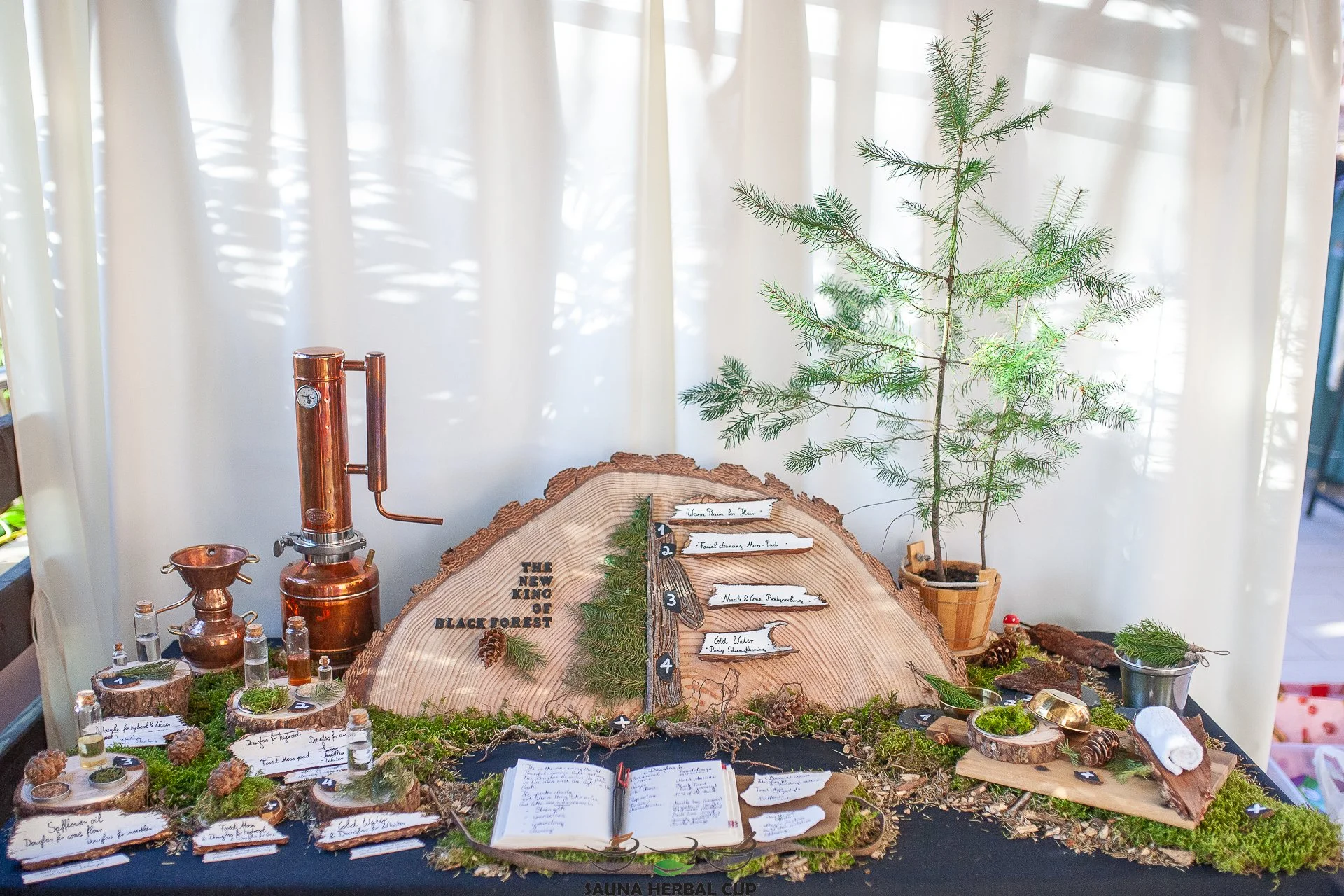
An example of a Peeling Presentation, from Germany competitor Sascha Burkart. Image credit: Sauna Herbal Cup
Peeling Presentation. This is a display of all of the components of the Peeling Procedure, laid out in a decorative way that details the ingredients used and what the story is behind their inclusion.
Peeling Procedure. This takes place in the steam room. Guests for the ritual will be invited to take a seat, and will receive a range of handmade natural treatments to use in the wet heat, ranging from scrubs, to masks to moisturisers. Often there will be a drink or a small snack once you have left the steam room too.
Sauna Herbal Ritual. Continuing on the theme that the participant has created, they then have to deliver a sauna ritual, with a large focus on the plants, whisks, smokes, infusions and oils that they roll out of the course of the performance to take the audience on a journey of aromas. Towel work can be used to distribute the heat and the scents, as well as fans and whisks.
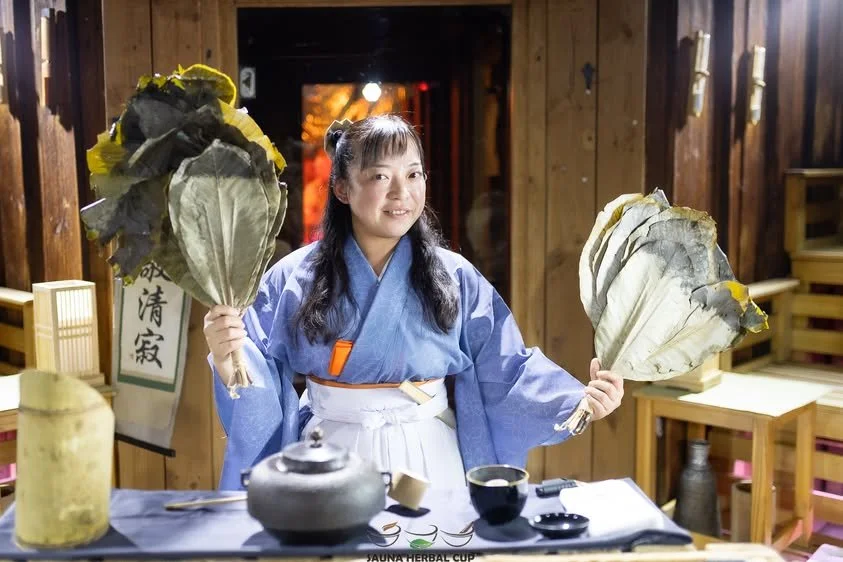
Japanese competitor Mayuka Sano prepares for her Sauna Herbal Ritual. Image credit: Sauna Herbal Cup
A competition grounded in nature.
Each entry must follow a clear theme, with points awarded for coherence, creativity and the way all elements are woven together.
Across all performances, nature takes centre stage. Sauna Masters create infusions, herbal blends, and other natural preparations entirely by hand, often spending months foraging, testing and refining. Practitioners travel globally and draw inspiration not only from sauna heritage, but also from hammam traditions, herbalism and wider bathing customs.
What it takes to excel at the Herbal Cup.
Spending time with competitors, organisers and jury members shows just how much dedication goes into the craft. To perform at this level, Sauna Masters must cultivate:
Knowledge. A curious mind and a grounded understanding of plants, folklore, herbalism and global bathing cultures. Every ingredient must have purpose and meaning.
Creativity. Participants must be able to explore and invent through their acquired knowledge, remixing traditions with new ideas and translating them into engaging performances.
Presence. Competitors not only connect with nature, but must also hold the room to really connect with the audience. They must also be aware of their own movement, shaping their performance to the space available in an environment they're likely to be unfamiliar with.
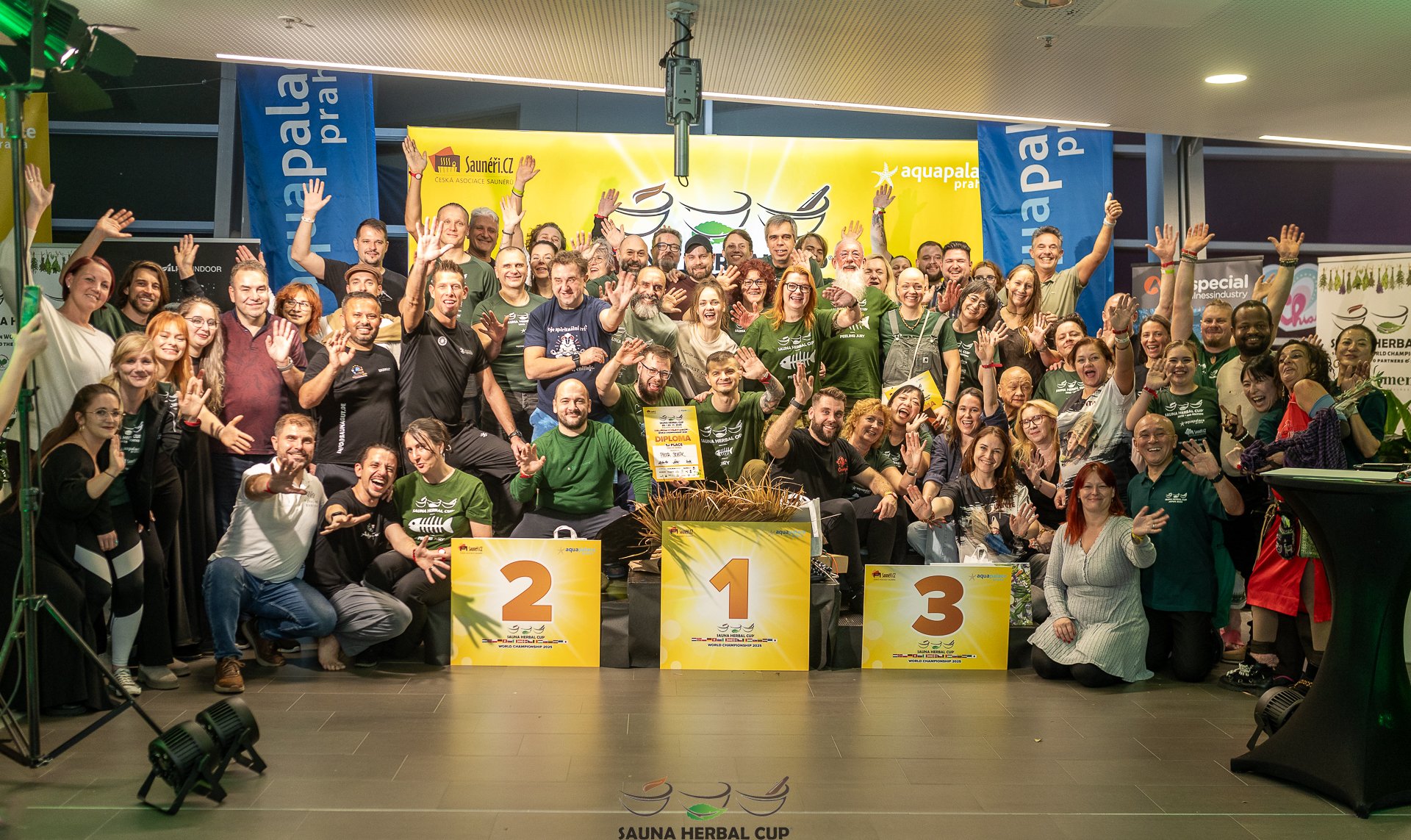
Competitors from 17 different countries compete in the Herbal Cup. Image credit: Sauna Herbal Cup
Attending the Herbal Cup gave us an appreciation of the standards expected internationally, inspiring us with what can be achieved as well as understanding the commitment needed from competitors. As well as allowing us to strengthen relationships with organisers, jury and participating teams, it also gave us practical insight into what will be needed to successfully deliver the UK’s first Herbal Cup event next year.
Interested in competing next year?
We will be announcing the UK venue in the new year, with the competition scheduled for October. The first‑ and second‑place winners will go on to represent the UK in the international final at the end of November.
Entries will open in the Spring, and participants will need to have completed basic Sauna Master training to take part. Ahead of this, we will host a webinar with the international Herbal Cup team to provide guidance and answer questions. We will provide more information and announcements in the new year.
For those eager to begin preparing, we encourage early exploration into natural sauna rituals, foraging and herbalism, and the use of handcrafted preparations in heat experiences. These foundations will be essential for anyone looking to compete in 2026 and beyond, as well as allowing anyone to level up their own professional offering as a Sauna Master.