Suds & Sisterhood: Women Enter the World of Schmeissing
The steam was dense - thick as low-lying fog - and I couldn’t see the floor or the ceiling, only the occasional sweep of someone’s arm through the haze. With our vision blurred to silhouettes, our other senses took over: the press of heat and humidity on the skin, the scent of foamy lather, the sound of easy, curious chatter among 20 women who had somehow found themselves in a very hot bathing room, in a corner of East London, on a Sunday night. When our guide raised the long raffia brush, coated in a glossy meringue of soap, the noise softened and we squinted through the mist.
We were about to be Schmeissed.
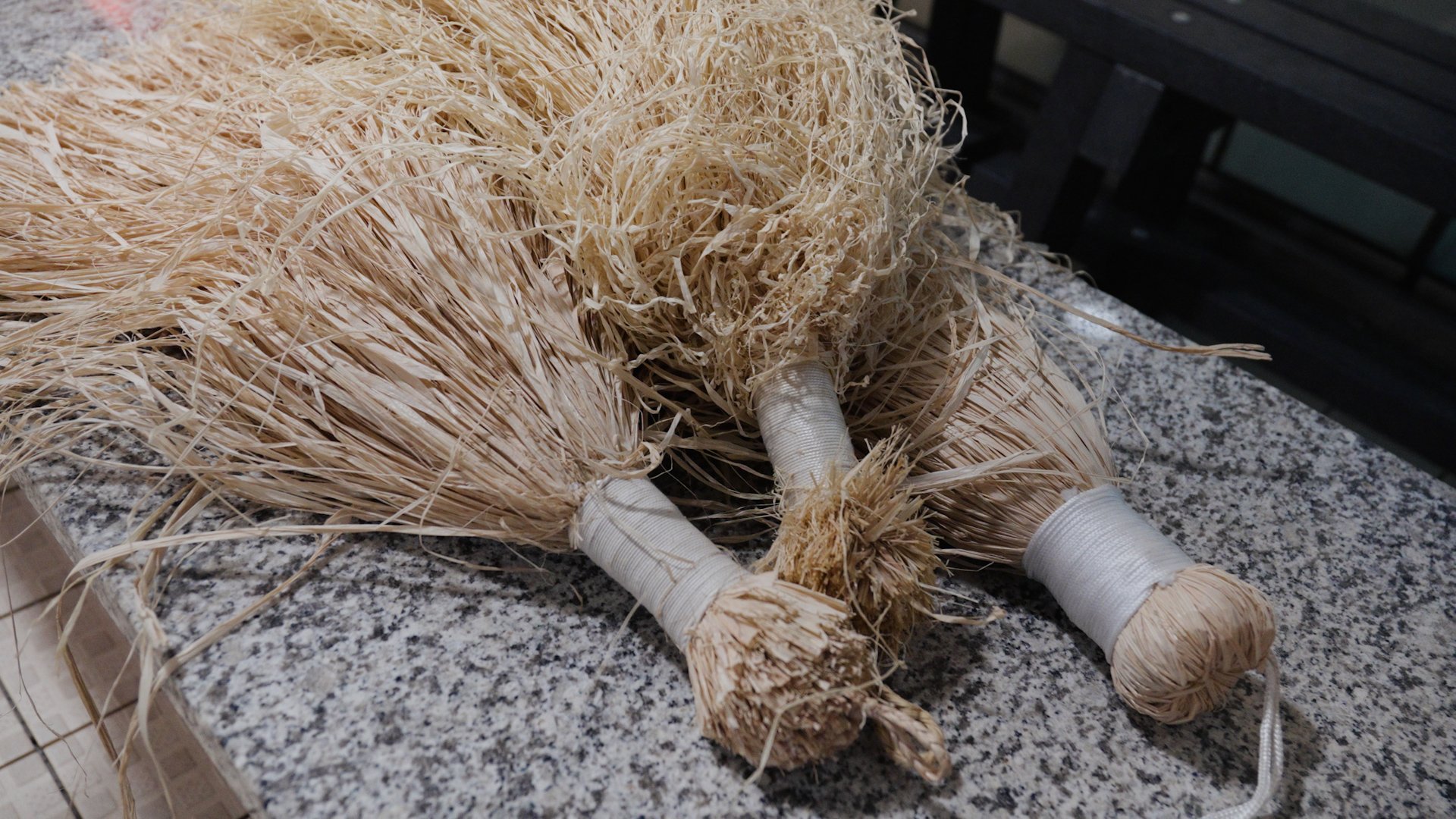
Photo: Raffia schmeissing brushes.
As a trained sauna practitioner, I embrace the culturally rooted bathing practices that bring far more than physical relaxation. These rituals carry history, nuance and a sense of place. Yet nothing prepared me for my first taste of schmeissing: a bathing tradition shaped by extremely hot steam, copious soap and vigorous brushing with a handmade raffia tool. Part exfoliation, part massage, part ceremony, it feels as much about lineage and togetherness as it is about skin, sweat and heat.
New Docklands Steam Baths in Canning Town - open since 1977 - is the unlikely but perfect setting for such an encounter. Upstairs, its functional changing rooms and café have the easy, lived-in feel of a college common room, serving homemade dishes and Eastern European snacks to a loyal, diverse crowd. Downstairs is where the magic happens: multiple steam rooms ranging from warm to blisteringly hot, a cedarwood sauna suitable for wet or dry use in the Eastern Slavic style, brisk showers and a cold plunge. General sessions run by gender with some mixed hours; the energy has long been predominantly male. As our host and trainer, Toby Mott of The Bath House, put it: “There’s no recent history of women schmeissing.”
And yet here we were.
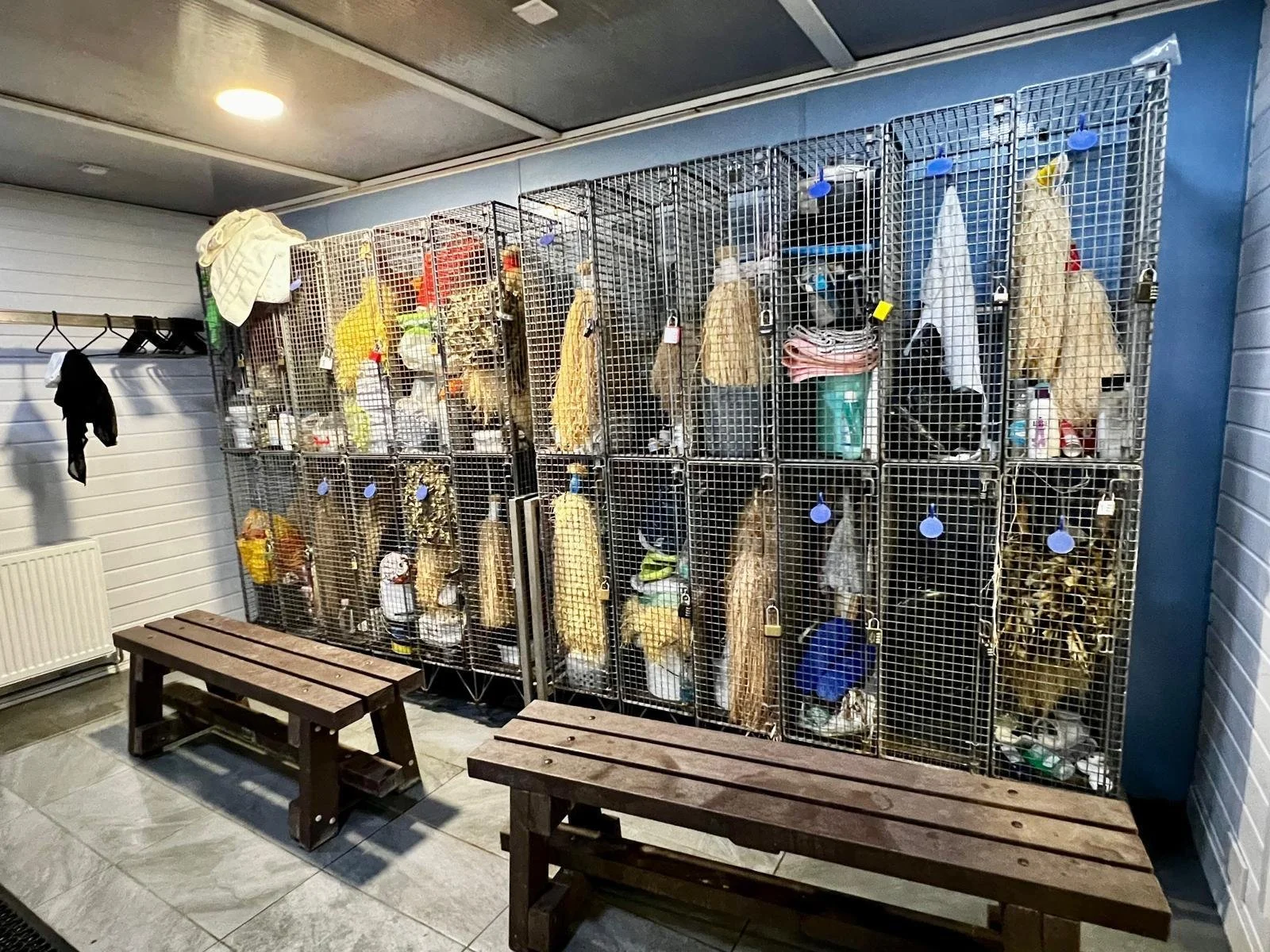
Photo: Locker room for schmeissing brushes at New Docklands Steam Baths
Though versions of it exist across many cultures, Schmeissing has particularly deep roots in Eastern European Jewish bathhouse traditions - from Lithuania, Latvia and Poland to Russia and Ukraine. In these communities the schvitz was not simply a hygiene stop but a social, spiritual and health - giving space. While the practice is not inherently male, it became associated with men over time. Historically, both women and men engaged in the practice in gender-segregated sessions, but women’s practices were less recorded, less public, and gradually less visible.
In London over the twentieth century, schvitzes evolved into distinctly male social clubs. Men gathered not just to sweat, but to talk business, form bonds and maintain community ties. Schmeissing was passed down from attendant to bather in spaces that were male by default.
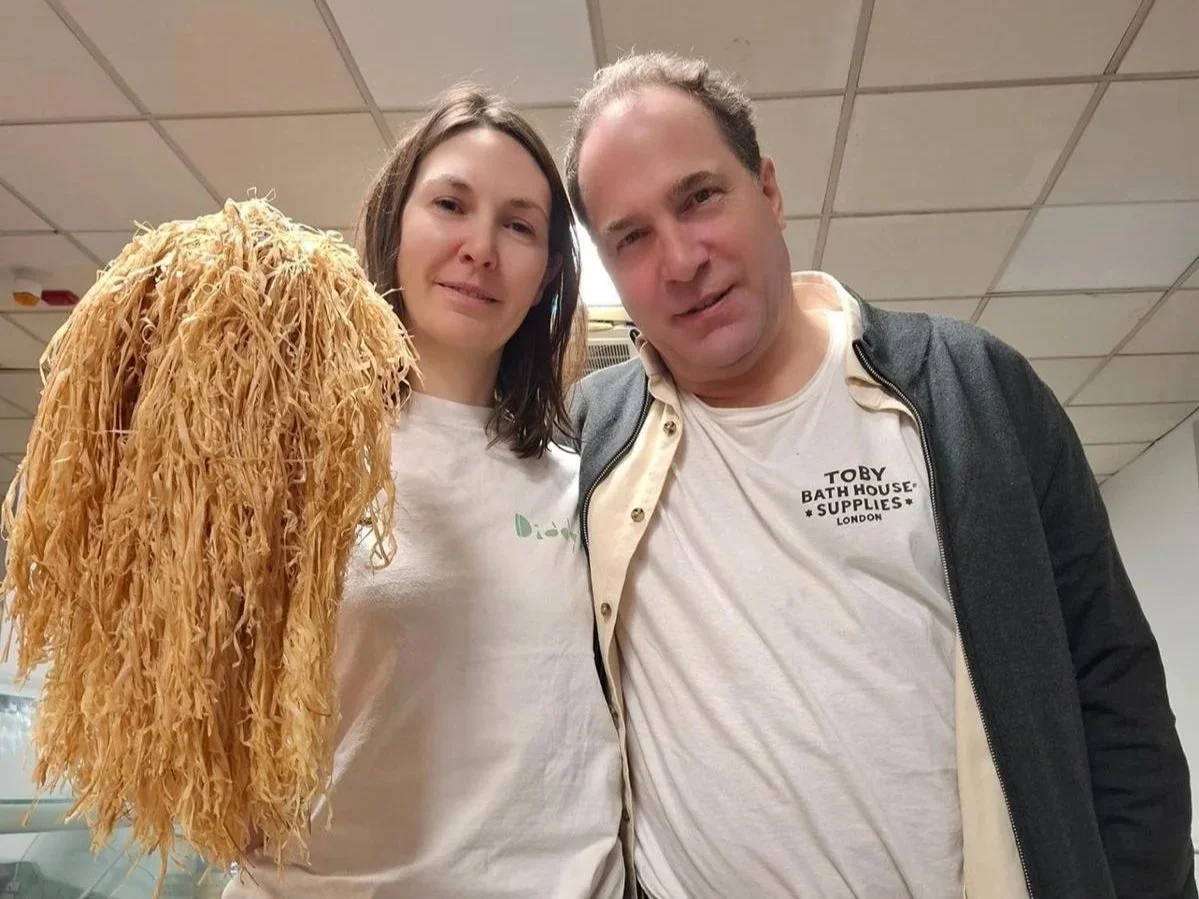
Photo: Toby Mott & Julia, who held the training session.
Toby entered this world at 18, frequenting Porchester Baths, then a hub of Jewish bathing culture. Acceptance didn’t come easily. “It took a long time to be accepted by the older schmeissers,” he recalled. “Eventually, through persistence, I was invited into the inner circle.” He speaks of these men with fondness and concern: many passed away during the pandemic, taking with them tacit knowledge and the unspoken etiquette of the practice. “Most of these old guys weren’t that welcoming,” he admitted, “and oddly reluctant to introduce new people into the clique.”
This is why our training that night felt quietly historic. A rare ritual being entrusted, gently, to new hands - and female ones at that.
Inside the steam rooms, the outside world vanished. We stood in a glowing universe of white fluffy steam clouds. Toby had whipped twelve bars of Turk Hammam soap into an enormous bowl of glossy foam. Demonstrating technique, he swept the raffia brush through the suds, gathering the soft mass into its long strands. A volunteer lay face-down on a marble slab, head covered in a towel. Toby began: slow motions along the spine, sweeping down toward the feet, rhythmic and deliberate. Next, sharper flicks, then firmer scrubs using a reshaped, two-handed grip. His whole body moved with the action. The effect was cleansing, sculptural, strangely ceremonial. After five minutes, his volunteer stepped out glowing, dazed and headed to the icy plunge.
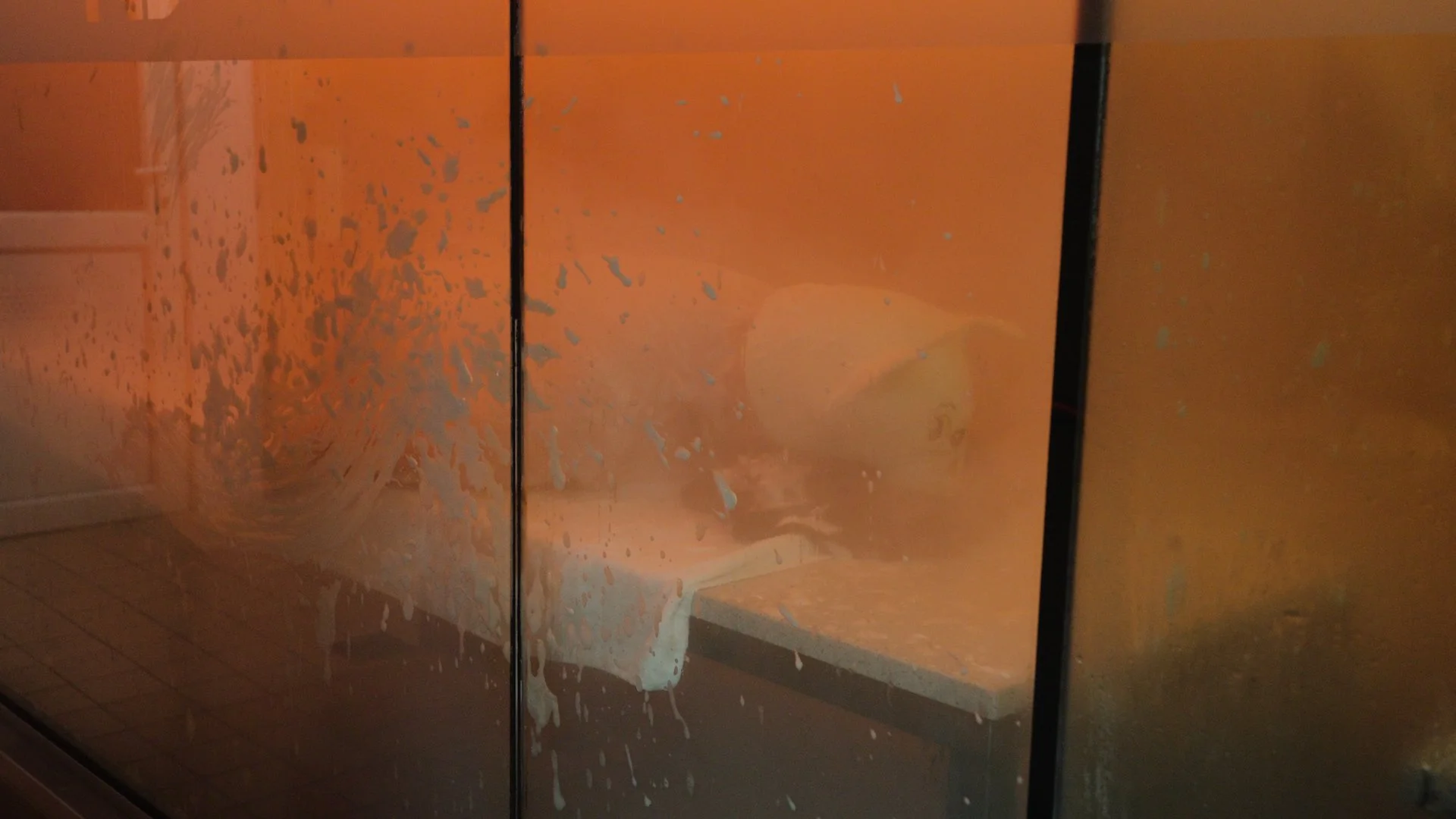
Photo: Person laying on a marble slab being schmeissed in the steam room.
Then it was our turn. For the next hour, we moved through steam and soap, taking turns to receive and then practise the art. It is intense to give but blissfully relaxing to receive - an art of touch that blends method with intuition.
Very quickly, any awkwardness dissolved. “It breaks down a boundary,” one woman observed later. I felt my energy bolstered - a shift from tentative to held, from self-conscious to connected. For many, the sense of gemeinschaft - a fragile but vital feeling of belonging - was the deepest impact. Toby suggested this may be why Porchester’s older practitioners often lived into their nineties: “It’s not even just the act. It’s the fact you’re schmeissing in community.”
For me, places to bathe, sauna and steam are like “third spaces” - not home, not work, definitely not the pub; humanising places of respite and encounter. Schmeissing, with its mix of touch, heat and trust, intensifies that feeling.
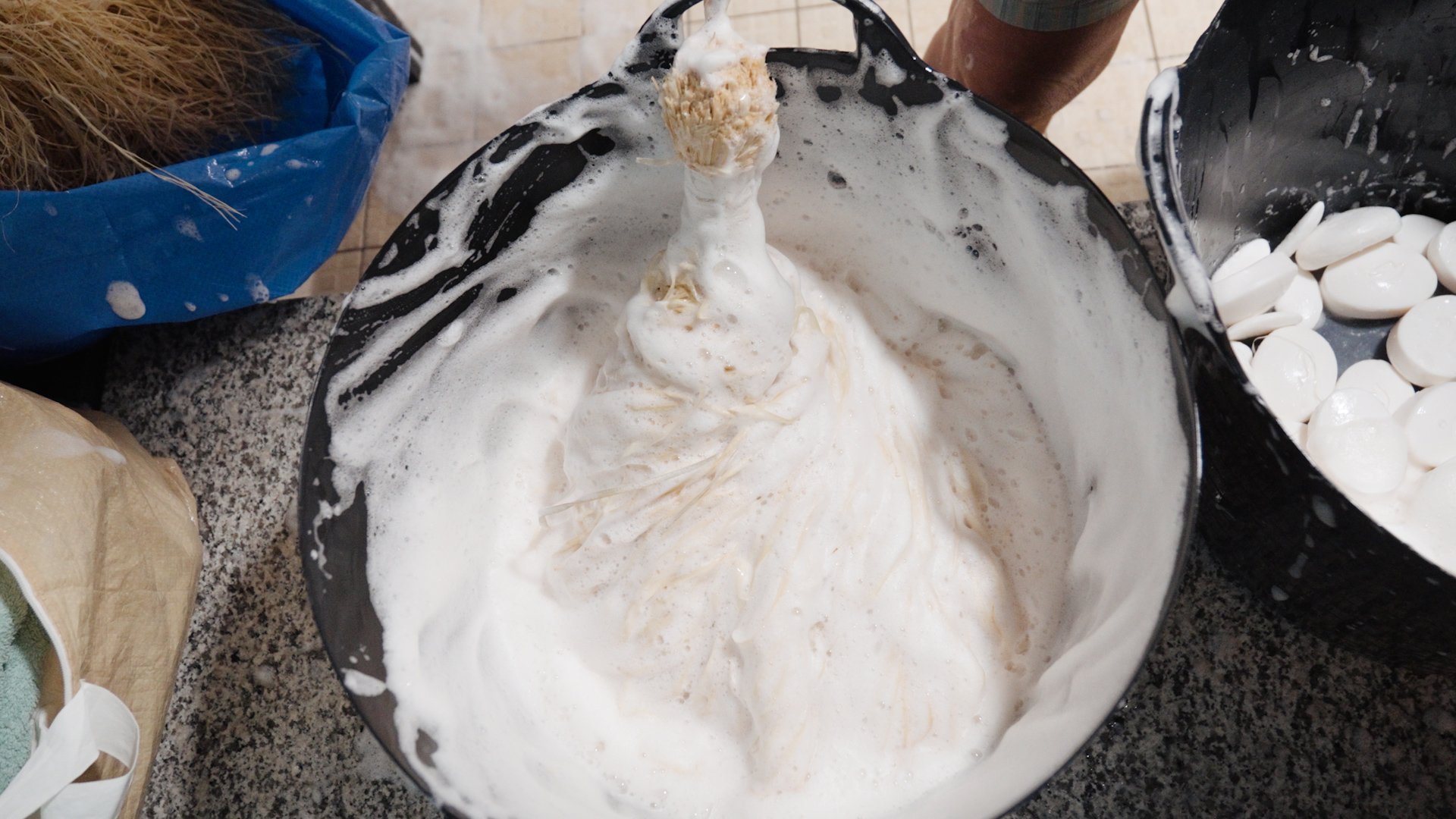
Photo: Using the raffia brush to create a soapy meringue.
Yet the tradition is fragile. Only a handful of artisans still make the raffia brushes. “They’re very hard to make. And it’s a secret,” says Toby. Without new practitioners, both the craft and the culture could fade. And yet the ritual is very much alive. As one participant put it, “It’s real, it’s living, it’s community.”
New Docklands remains one of the last London bathhouses actively welcoming the practice. The spirit feels intact: democratic, diverse, warm. And 20 women learning a practice historically reserved for men felt like a meaningful expansion - not dilution, but continuation.
When we finally stepped outside, damp-haired and glowing, what stayed with me wasn’t just the softness of my skin but the sense of having entered a lineage that stretches far beyond East London. Schmeissing may have begun as a niche Jewish tradition, but its heart is universal: the need for connection, for care, for communal heat and renewal. As one participant, Luisa, reflected: “It’s not about money; it’s about community, collaboration, caring.”
I went home changed. Subtly, but unmistakably. Looser. Brighter. Part, perhaps, of the next chapter of a living, steaming, inclusive tradition.
To learn more about schmeissing, contact Toby Mott of The Bath House Group @the_bath_house_group.
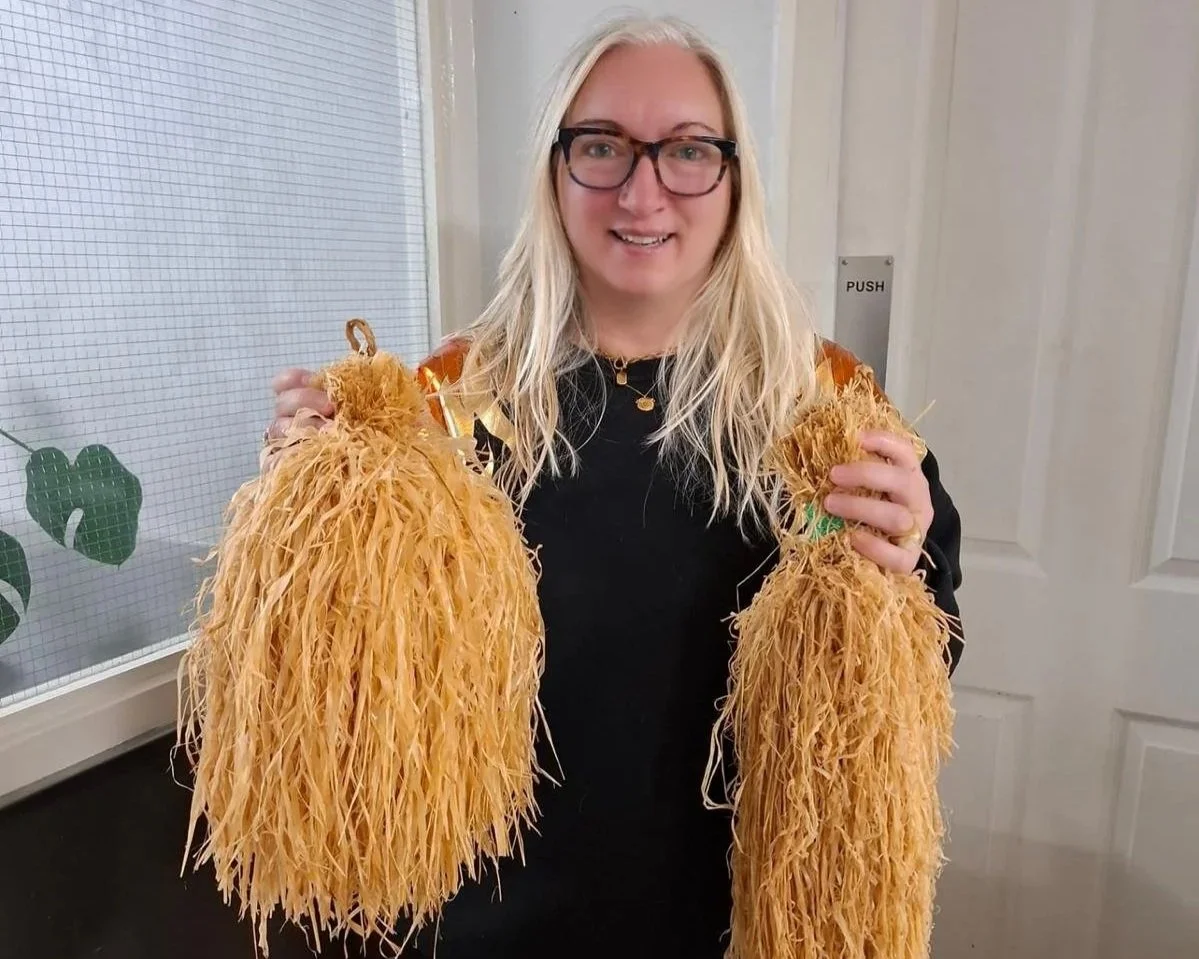
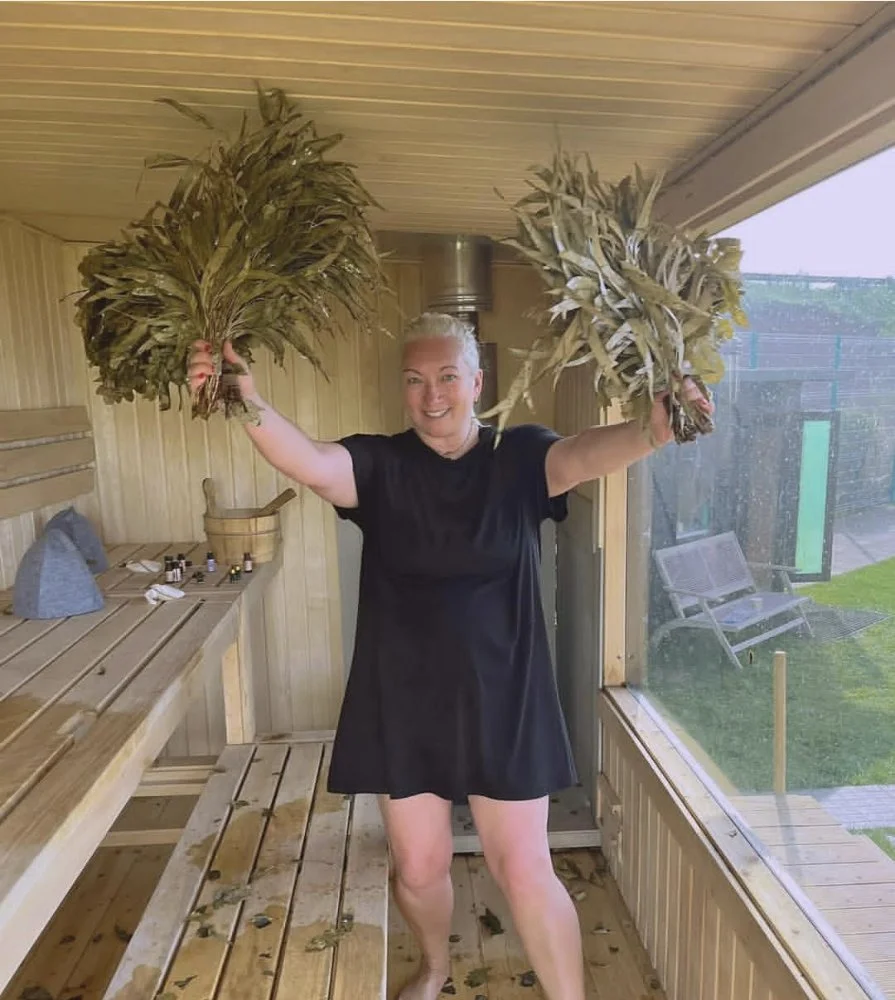
Photo: Fay MacDonald post schmeissing with 2 raffia brushes.